
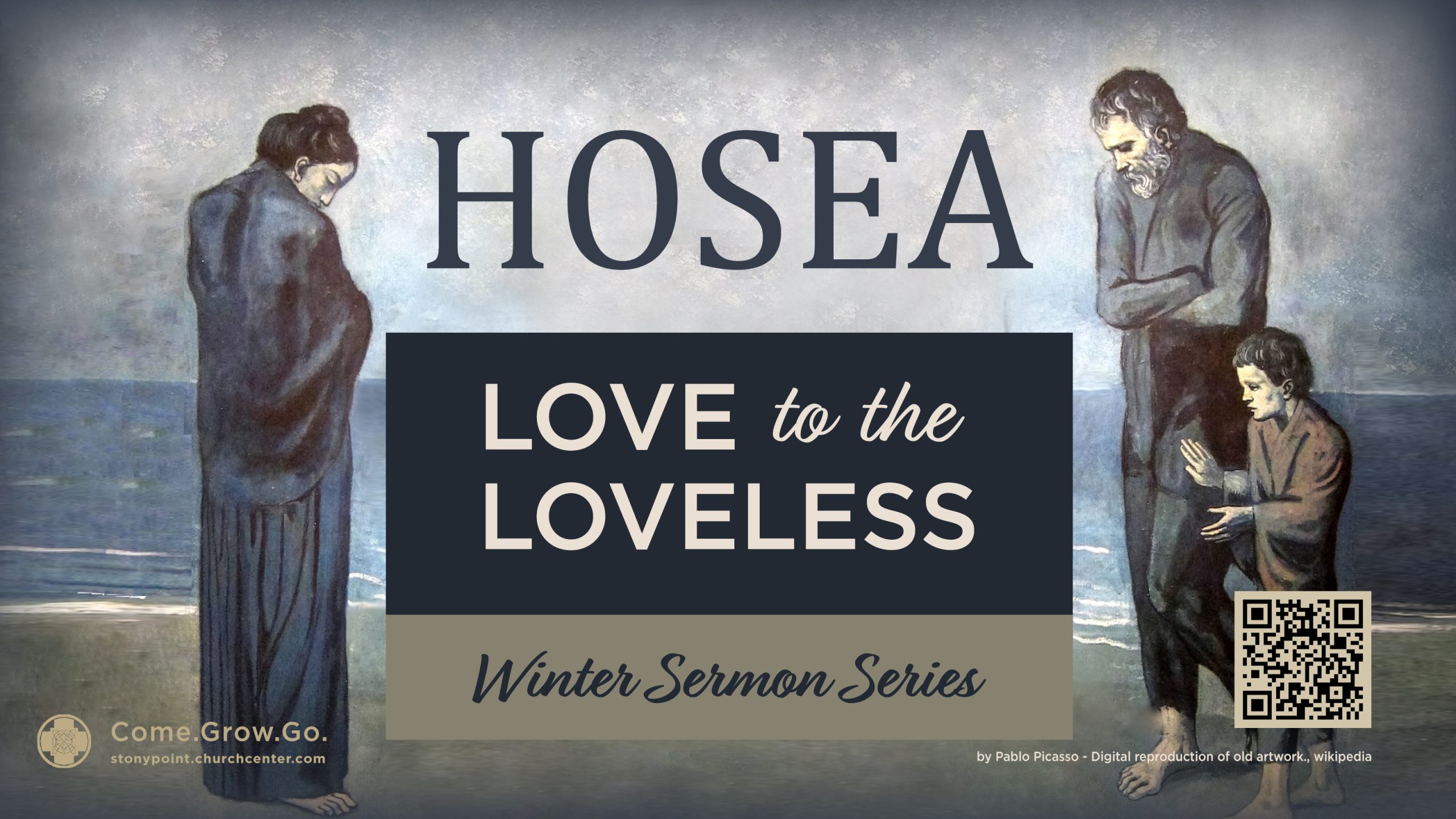
Sermon Discussion Questions
Hosea 1:1-9
Warm Up Question: It’s not unusual to have a close friend, spouse or family member express disappointment about your lack of commitment to your relationship with them. They may even describe what they see as your responsibility towards them in language which you feel is way over the top and not how you see your responsibility at all. How have you reacted? How has the language they have used help you to understand their hurt or their feeling of distance from you as something that helps you rather than something you’re just defensive about?
READ Hosea 1:1-9
Context: It is the mid-8th century in the Middle East. Solomon’s greater Israel has split in two and the stronger northern kingdom of Israel has been at war with its smaller Southern cousin, Judah. It is a time of extraordinary instability: the superpower, Assyria, has been distracted up to this point but is starting to turn its sights on the Jews again. The northern kingdom has sunk into a casual syncretism (the mixing of Jewish and pagan religion). Hosea was called by God to preach to Israel in the last days of the kingdom before (although not inevitably) Assyria would destroy them. Contemporary with Amos, Micah and Isaiah, Hosea preaches to Israel about her unfaithfulness, comparing her to an unrepentantly, unfaithful wife.
- What do you make of the historical circumstances of Hosea 1:1. What is Hosea telling us about his life and time by mentioning all these kings who reigned while he prophesied? (Hint: Six kings reigned in just 25 years and four of those were murdered – read 2 Kings 15:8-17:6.) How could such a time affect the way in which a prophet from God would need to communicate to God’s people?
- READ verses 2-3 again. Imagine these verses splashed across the front of a tabloid newspaper. What do you think the headlines would read? But who is this about, really, according to the text?
- We read in verse 2b that God told Hosea to seek out and marry a woman that he knew to be adulterous by nature, by reputation and by habit. Some have suggested that this is all just a metaphor, but verse 3 describes what seems to be a definite historical action: he married her, a family background, and she had a name, Gomer Bat-Diblaim. Several interpretations of her adultery have been suggested by commentators: a. she was currently a prostitute when Hosea marries her or b. to his surprise, she becomes a prostitute after he marries her, or c. knowing that she will be unfaithful and prostitute herself in their marriage, he marries her. Reading the text, which of these interpretations, do you think is most likely?
- God couldn’t have used a more shocking metaphor to religious Israel (although they were blind to their own idolatry). Most of us probably go through this experience with family or spouse or family, of being shocked by the difference in how they view the strength of the relationship. Yet when God calls His people unfaithful like a wife might be committing adultery with other lovers, do you think He’s going over the top?
- We read in verses 4-9 that Gomer has three children, one by Hosea and two by other men, whom Hosea takes into his own home and raises as his own. List who they are and what their names mean. How do you think each of these are relevant to Israel’s spiritual danger?
- If your spiritual life was a news headline or a billboard that people could read, what would it say about you and God, and how He has responded to you by His grace? What name would you give yourself?
- Ask God that as we begin this new year that for you and the rest of Stony Point Church, the LORD will speak through this book to encourage and support us where we are trying to be faithful, and rebuke us and give us joy to repent in Christ, where we have given up trying.